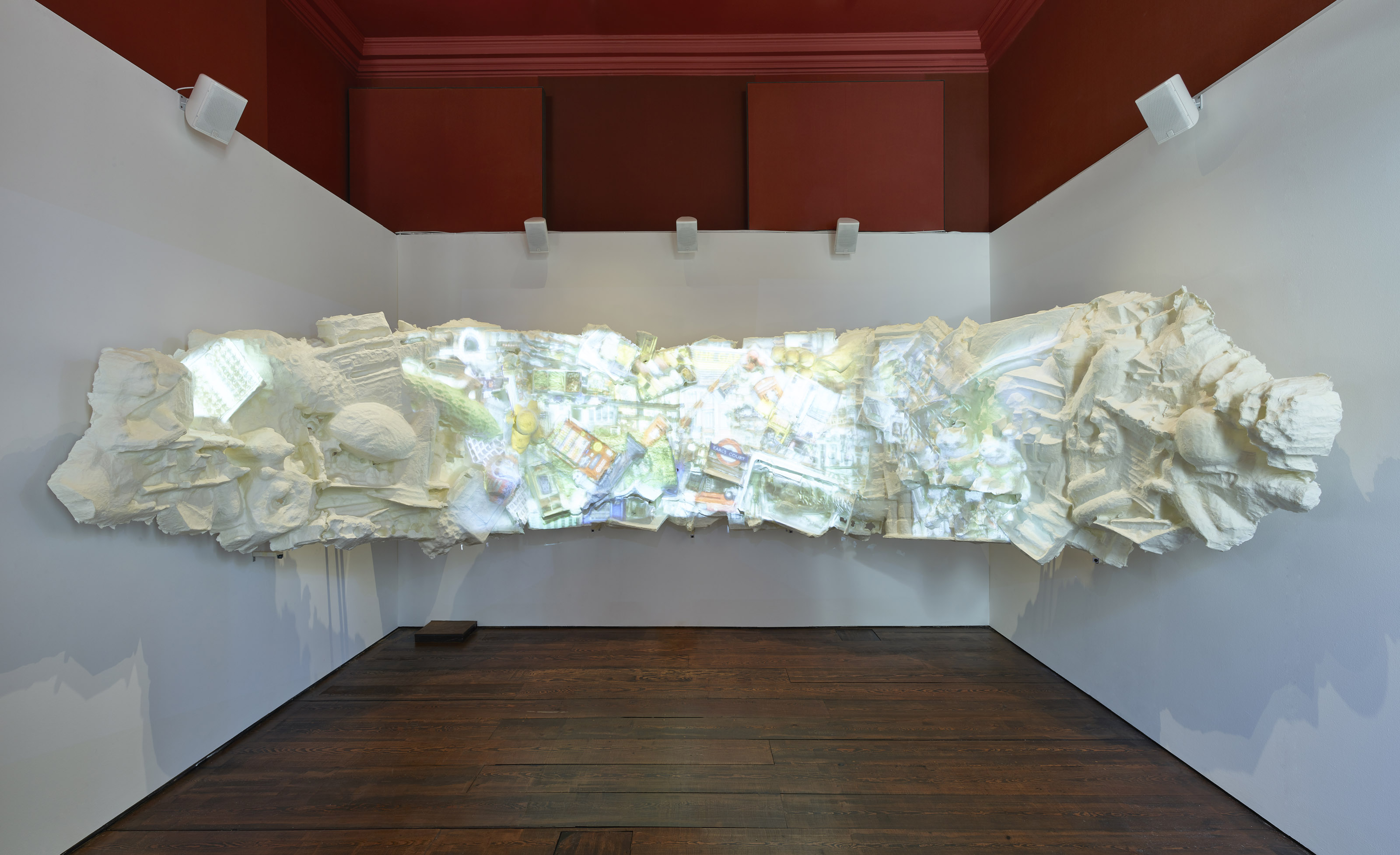
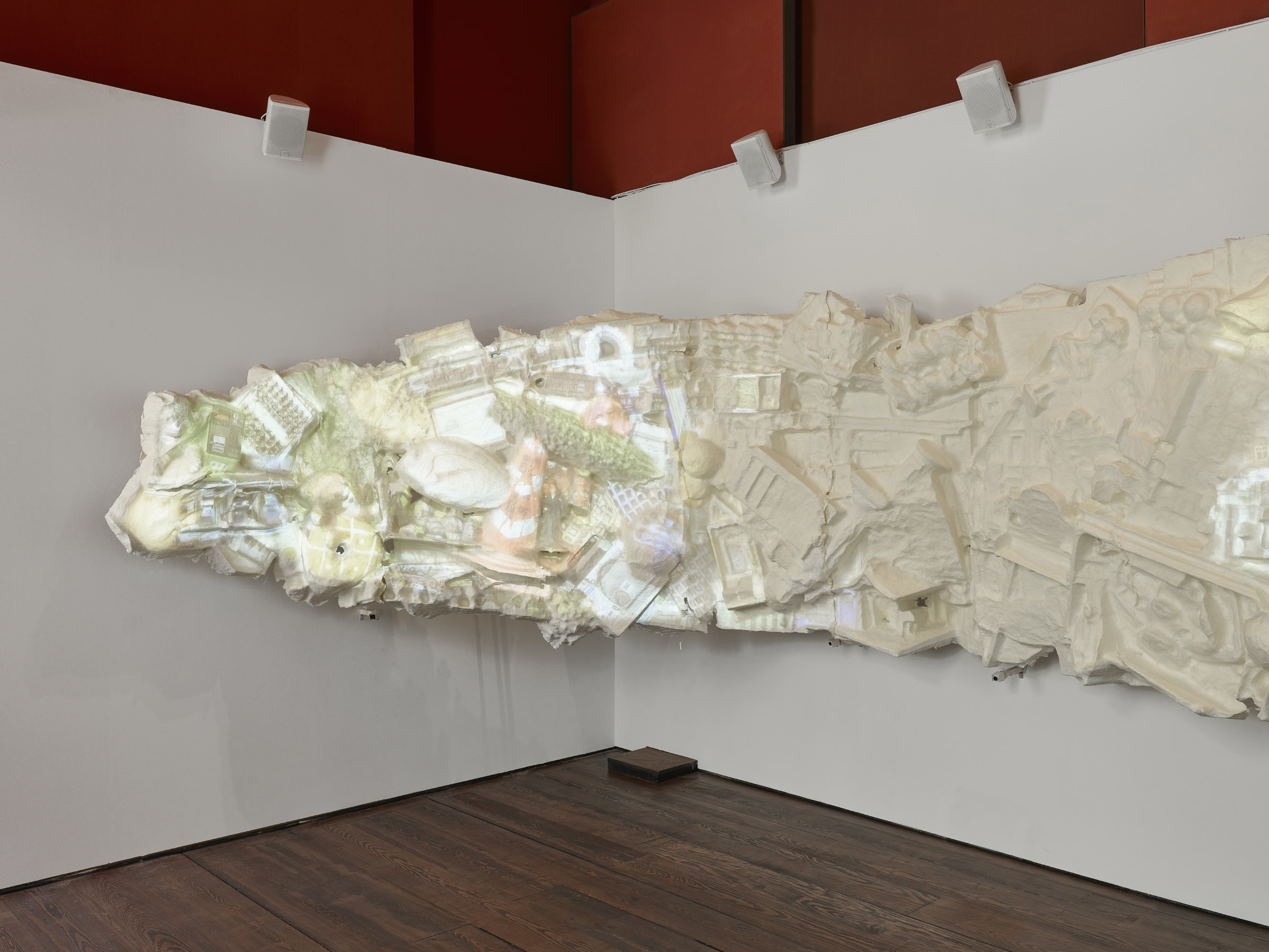
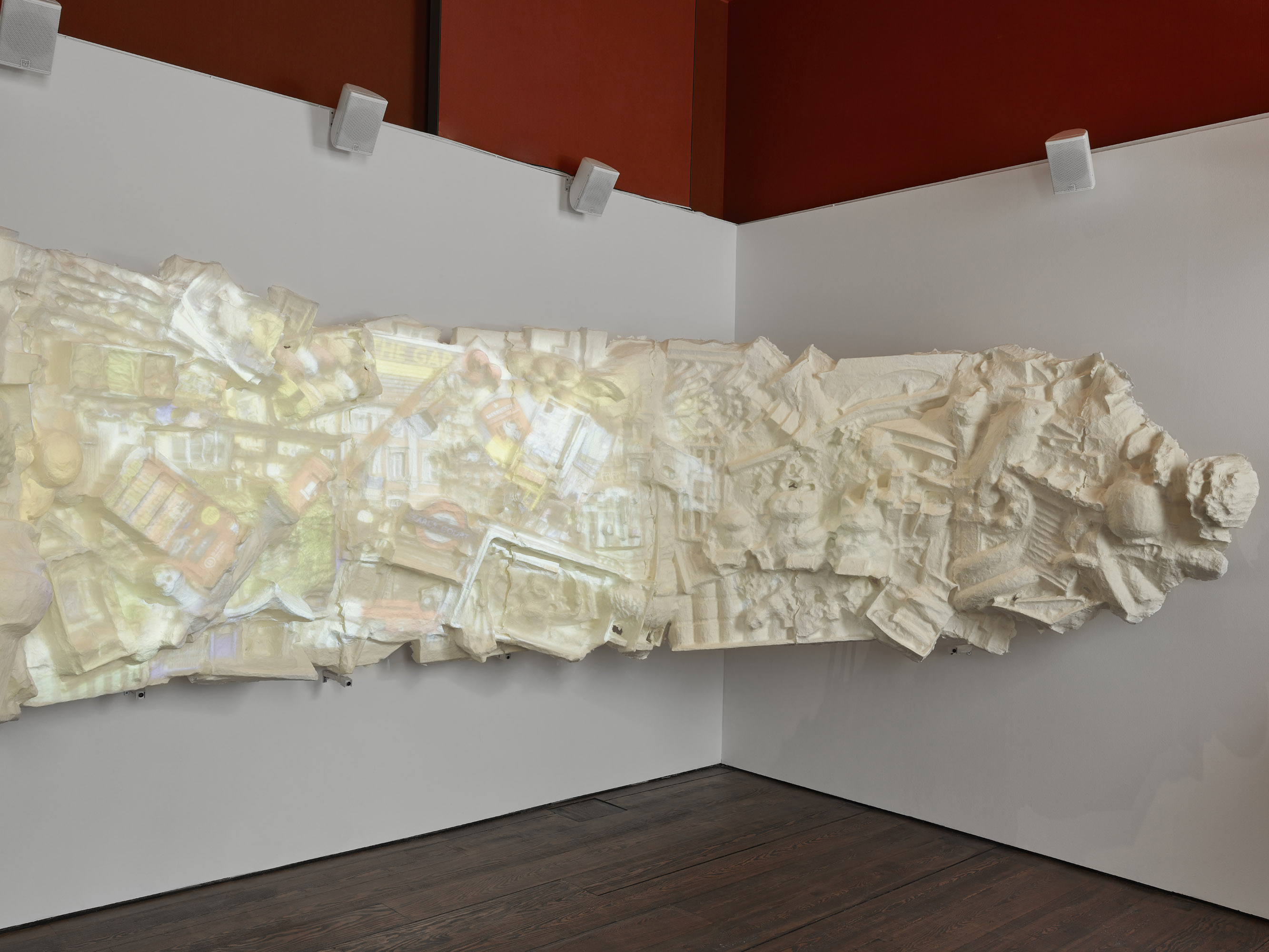
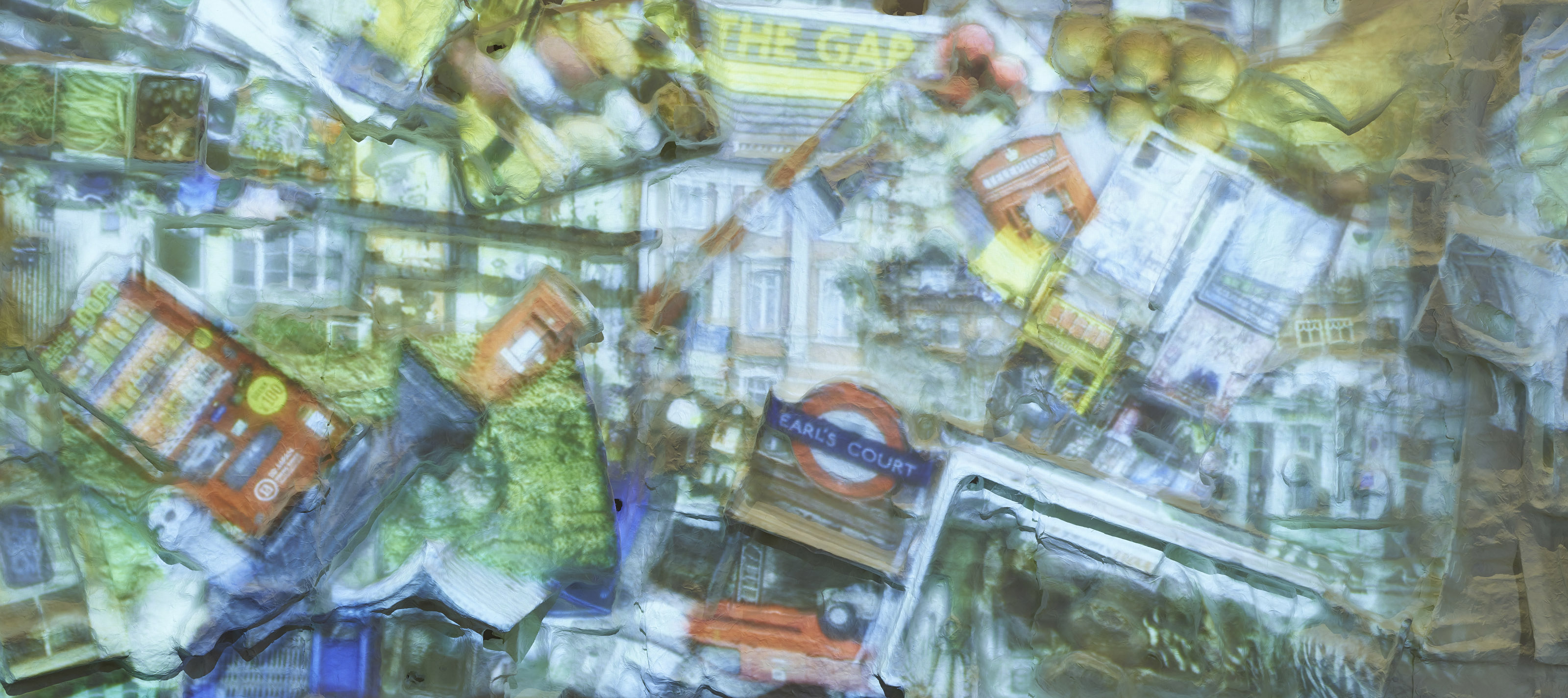
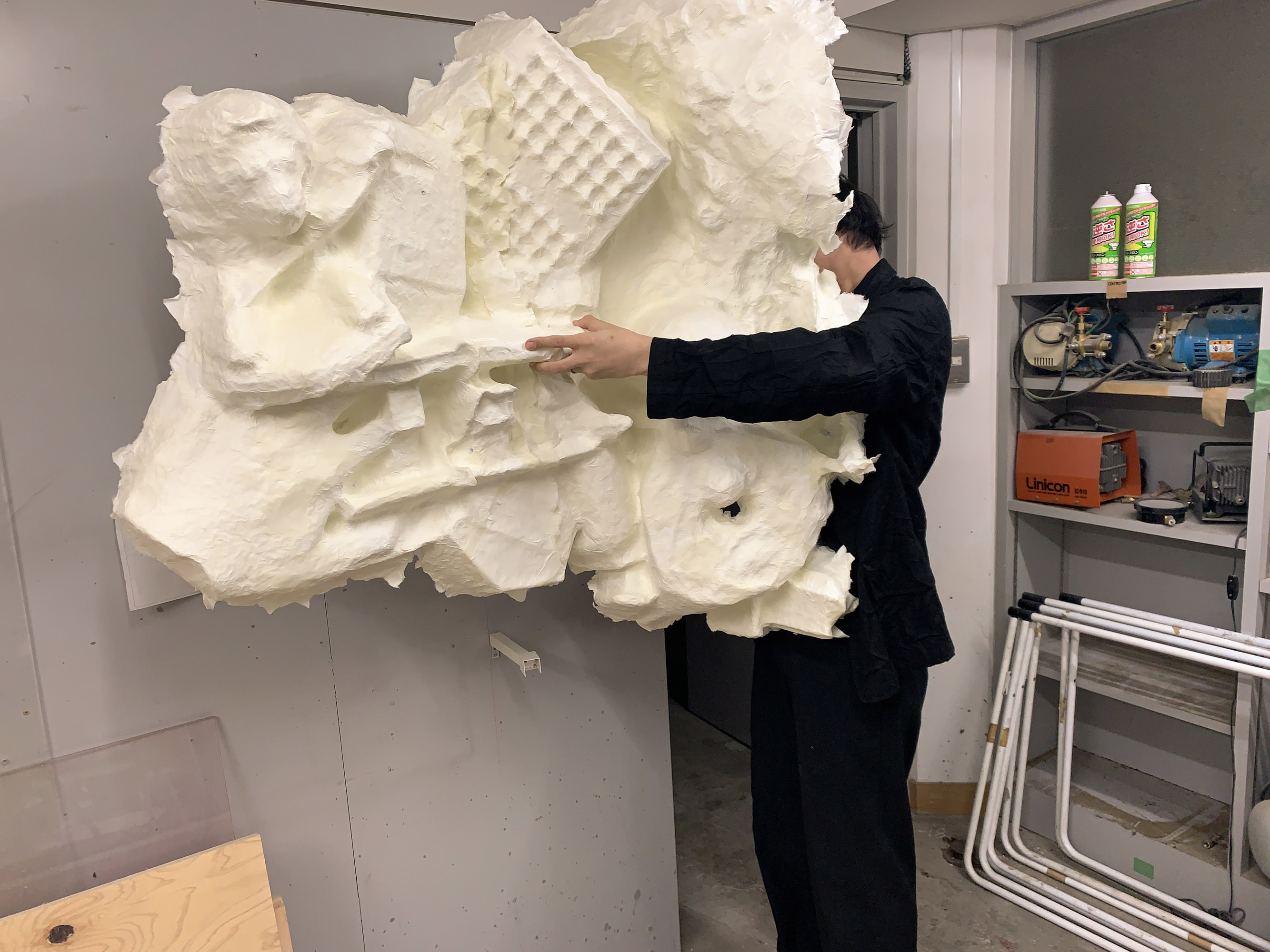
"Reinventing Texture" is a project that seeks to gather, reassemble, and reconstruct urban textures through the synergy of digital technologies and traditional techniques and materials. The purpose of this initiative is to unearth fresh textures and images of Tokyo and London cities through this exploratory process.
Cities as Textural Layers
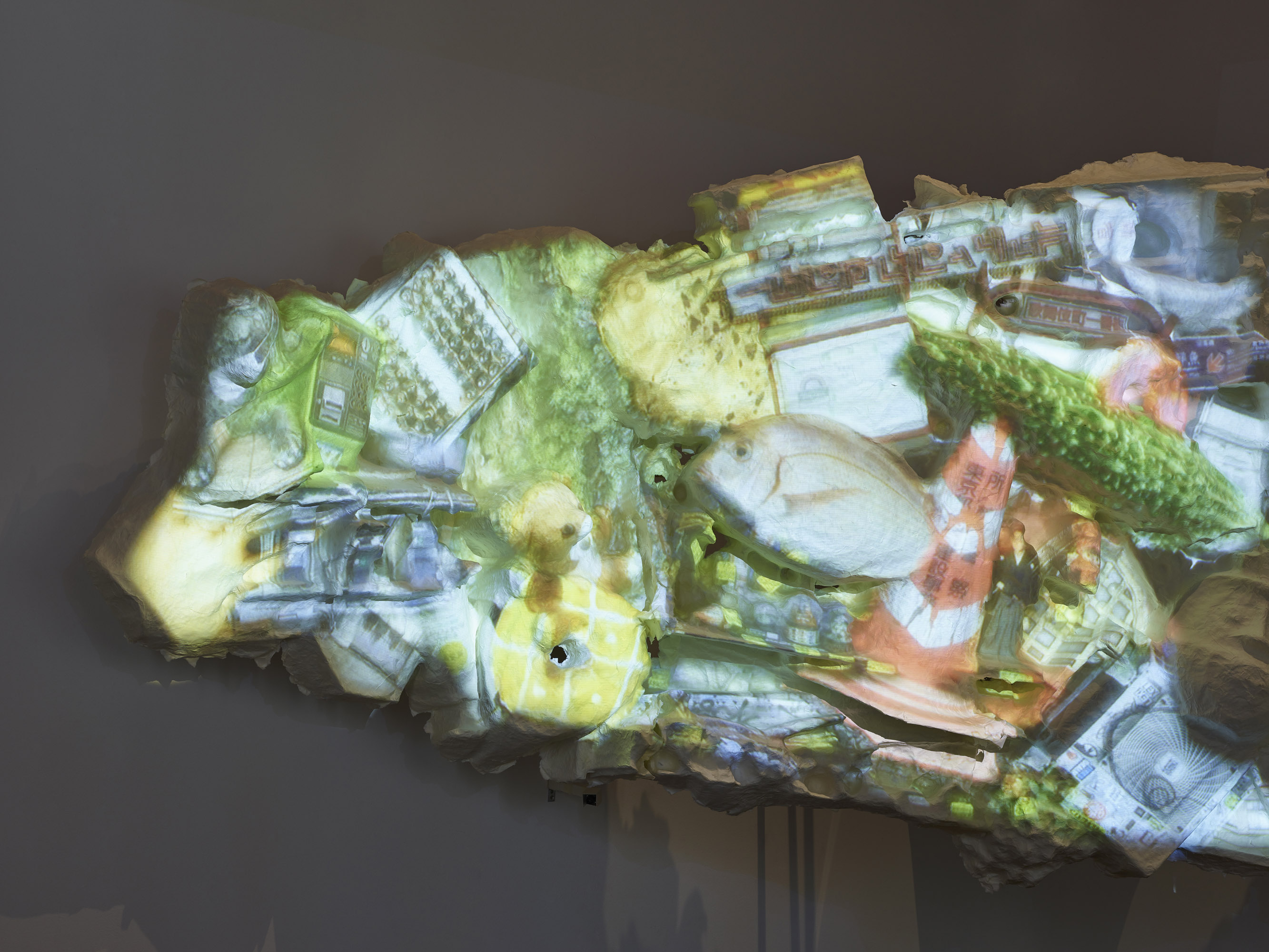
Cities are an amalgamation of countless textures layered at various scales. On a microscopic level, we encounter rugged asphalt, rough railway bridges, bumpy stone walls, sticky doughnuts, gloomy moss, crispy fallen leaves, fish shop fronts with glistening fish on display, shiny electronic billboards, and smooth curtain walls. From a macroscopic perspective, we can observe jumbled buildings, lumpy green spaces, and knobby office buildings. German philosopher Walter Benjamin noted that our usual experience of urban space is one of distraction, without much attention paid to these diverse textures. Benjamin suggests that our interaction with our urban environment is "tactile". We formulate images of the city within us not only through physically touching textures but also by visually and audibly experiencing them in a gentle manner - in essence, it is a resonance among different sensory perceptions.
Collecting Textures
An example of an attempt to encapsulate the image of a city by collecting its textures is "Urban Frottage" by Japanese artist Tomoharu Makabe in the 1970s. Frottage is a technique where a pencil is rubbed over a piece of paper placed on an object to transfer its texture. Makabe employed this method to gather textures such as those from manholes, asphalt, and wire meshes in a bid to document the evolving cityscapes of Tokyo during the high economic growth period of the 1970s.
This project revisits Makabe's Urban Frottage employing photogrammetry. Photogrammetry is a 3D scanning technique that reconstructs a digital model of a target object from processing photographs of that object taken from various angles. Special equipment is not necessary for capturing the source photographs, and between 50 to 100 photos taken with a handheld smartphone can produce a highly precise digital model. While the scale of the target object in Urban Frottage is confined by the size of the paper, photogrammetry has no such scale limitations. By replacing paper and pencil with a smartphone, a fresh image of the city in the information society will emerge.
The New Texture of the City
The world currently finds itself grappling with a sense of anxiety about touching various surfaces. This unease will significantly influence how we perceive city textures. In contrast to Urban Frottage, where paper was directly placed on an object's surface and a pencil physically rubbed over it, photogrammetry captures texture without any physical contact, as the digital eye virtually grazes the object's surface.
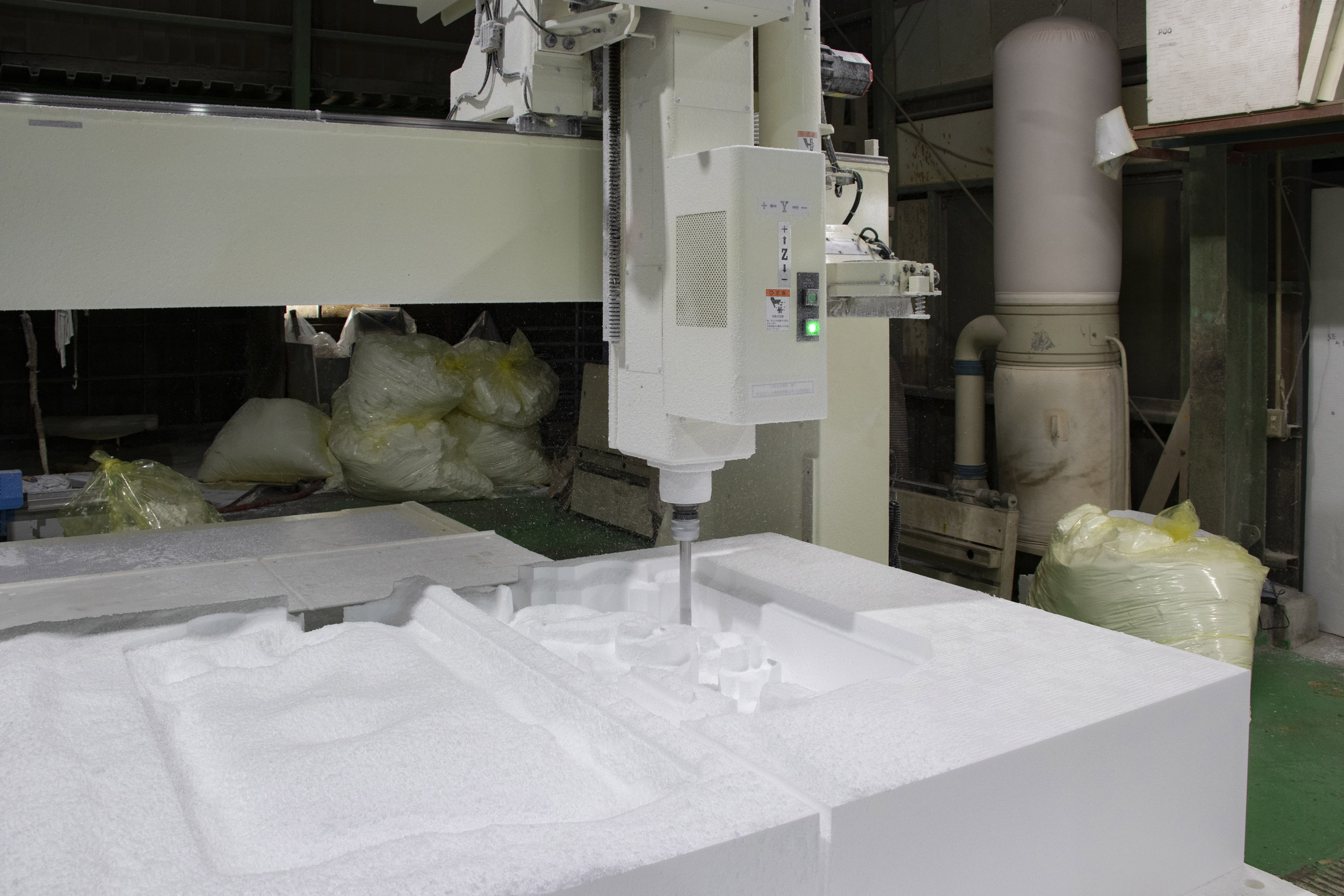
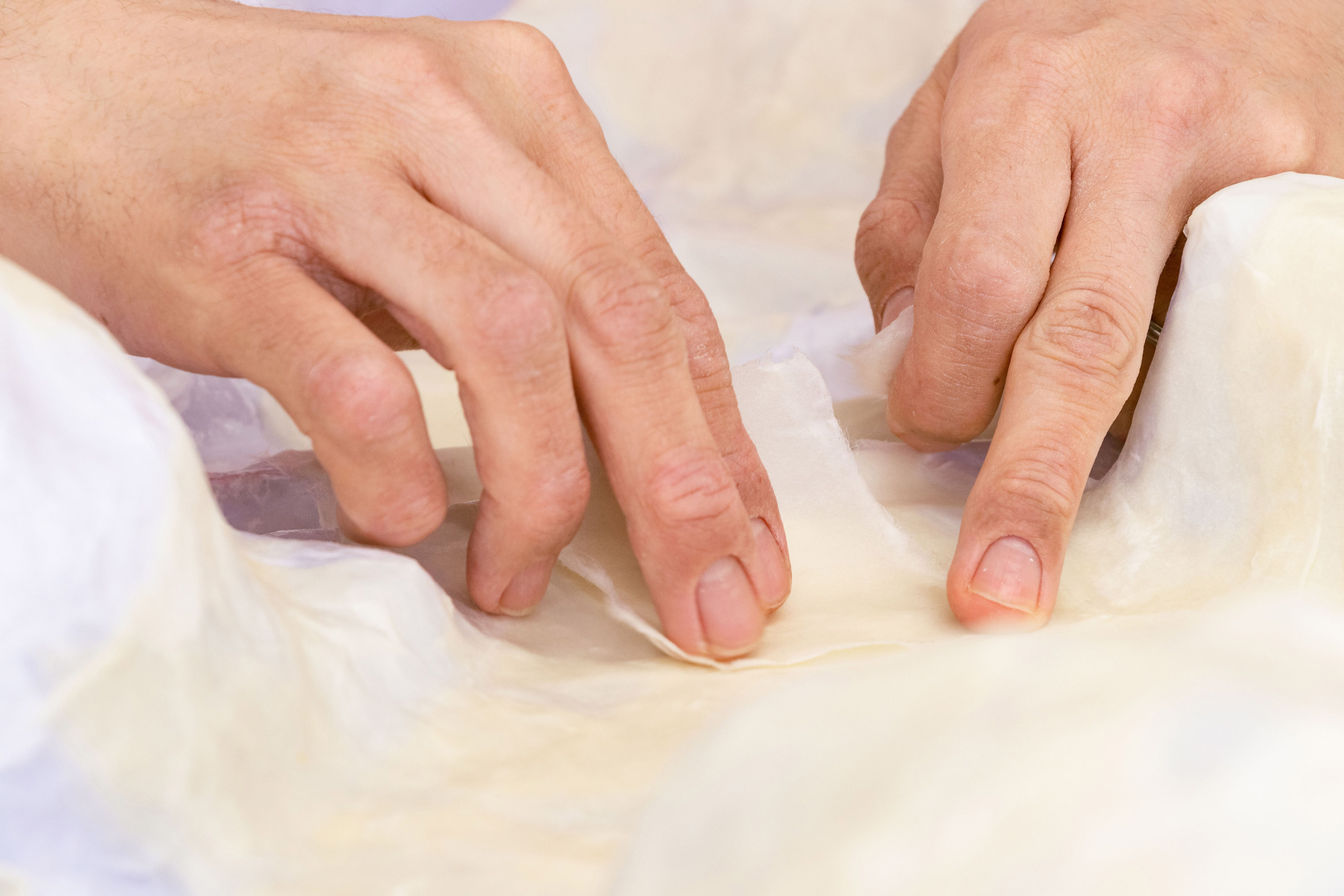
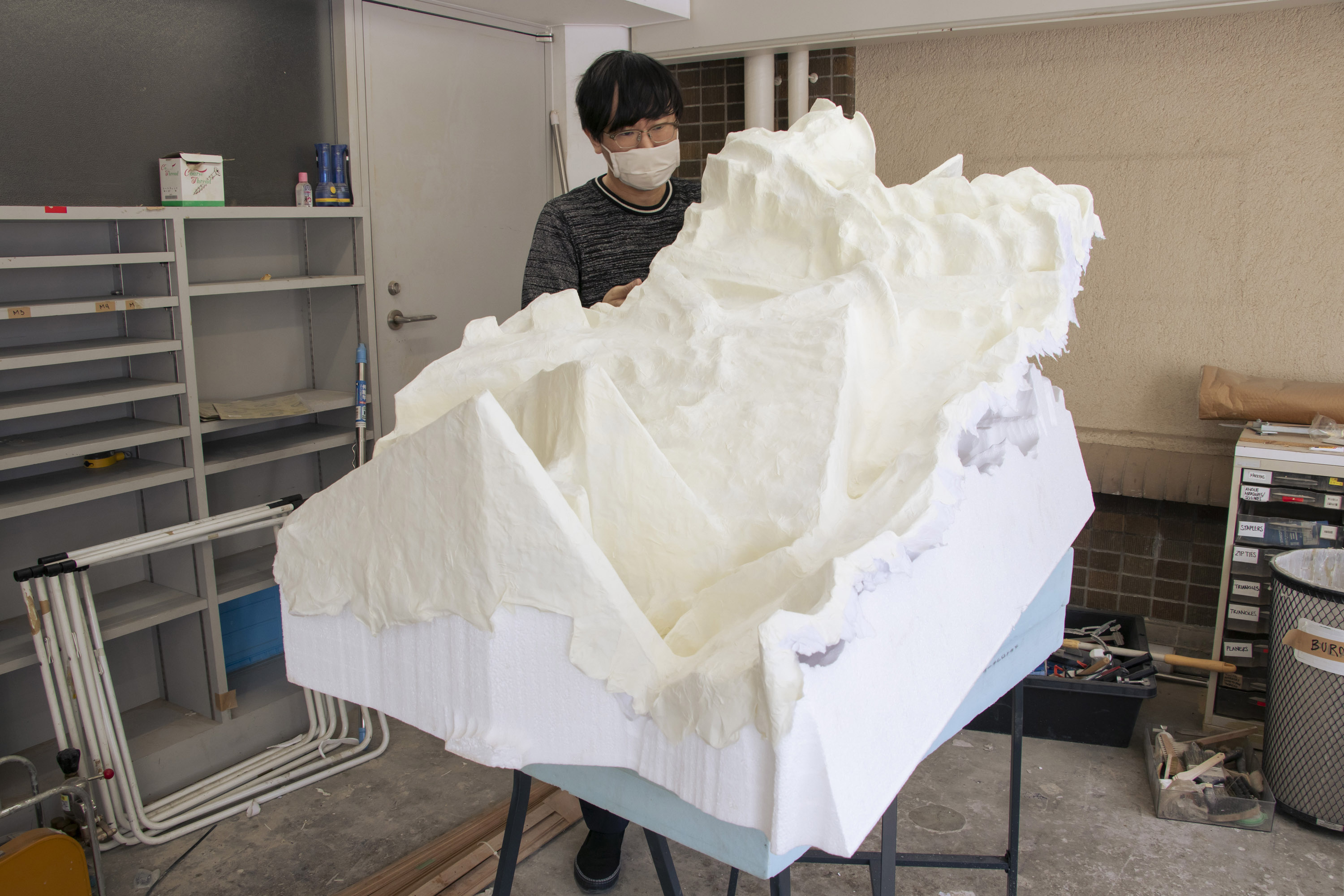
The gathered textures are then reassembled into a digital relief and reconstructed in physical space using Japanese paper material, leveraging both digital fabrication and papier-mâché techniques. The texture maps of the digital models are projected onto the Japanese paper's surface. Through the interplay between physical and digital spaces, this project envisages the future of urban textures.
Year : 2021
Location : Somerset House, London, UK
Exhibition : London Design Biennale 2021
Design : THD (Toshiki Hirano)
Curator : Clare Farrow
Construction : Creator International
Photo : Prudence Cuming (First six photos)